01Bankers and business brokers
Join relevant sale processes.
Send a current acquisition brief to intermediaries whose mandates fit it. State your business model, geography, size measure and the types of situations you can evaluate. When a teaser arrives, record the company or a temporary confidential identifier, the source and the response deadline.
A marketed opportunity can reach several buyers. Establish the process and information requirements rather than assuming that a familiar intermediary means limited competition.
What to record: Measure relevant unique companies received and whether your team responded before the stated deadline.
02Accountants, lawyers and other professional referrals
Reach an owner through an existing relationship.
Help trusted contacts recognize a fit without expecting them to run your acquisition search. A short description of the businesses you seek is easier to use than a broad request for anything interesting. Ask whether an owner has agreed to an introduction before exchanging sensitive details.
A professional’s suggestion that an owner might sell is different from the owner expressing interest. Treat it as a referral to explore.
What to record: Record the referring relationship, permission for contact and the owner’s response when established.
03Portfolio companies and operating relationships
Find targets connected to the operating thesis.
Ask the operating team which capabilities, locations or customer needs an acquisition could address. Separate an attractive supplier relationship from a business the platform could actually integrate. For an add-on search, explain who would manage the acquired operation.
Commercial familiarity does not establish ownership, financial fit or willingness to sell. It may also create sensitive relationships that need a careful approach.
What to record: Record the acquisition rationale and the person who will assess operational fit.
04Industry events and associations
Develop relationships and improve market coverage.
Use conferences, trade shows and industry communities to learn how a market is organized and who participates. Capture the company and the substance of the conversation, then assign a next step. A stack of business cards should not become a list of assumed sellers.
Attendance is evidence of participation in an industry. It is not evidence that the company is for sale. Agree an appropriate reason to continue the conversation.
What to record: Record relevant new companies and agreed follow-ups, keeping general networking separate from sale discussions.
05Targeted owner campaigns
Approach companies that fit a defined search.
Translate the acquisition brief into a researchable target group, check existing relationships and exclusions, and contact the appropriate owners. The message should explain why a conversation may be relevant to that business. Ask about interest instead of presenting a database match as a seller.
An owner may fit the brief and decline. Another may be curious but not considering a transaction. Direct contact also does not prove exclusivity or a lower purchase price.
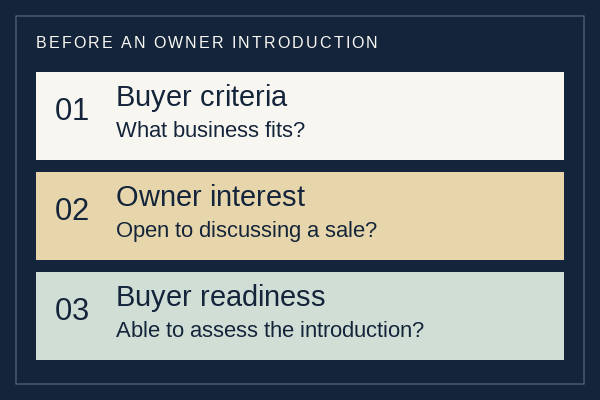
What to record: Record research fit, owner response, stated timing and the next step separately. GLZR builds campaigns around the buyer’s criteria and gathers initial information before introductions.
06Inbound enquiries and deal networks
Make it easier for relevant opportunities to reach you.
A clear acquisition page and a current network profile help owners and intermediaries understand what to bring you. Route incoming opportunities to someone who can assess them. Compare the information received with the same criteria used for outbound sourcing.
Different networks serve different participants. Check who submitted the opportunity, what has been screened and whether it is already in your pipeline.
What to record: Record origin, duplicate status and the reason an opportunity passed or failed your initial screen.